
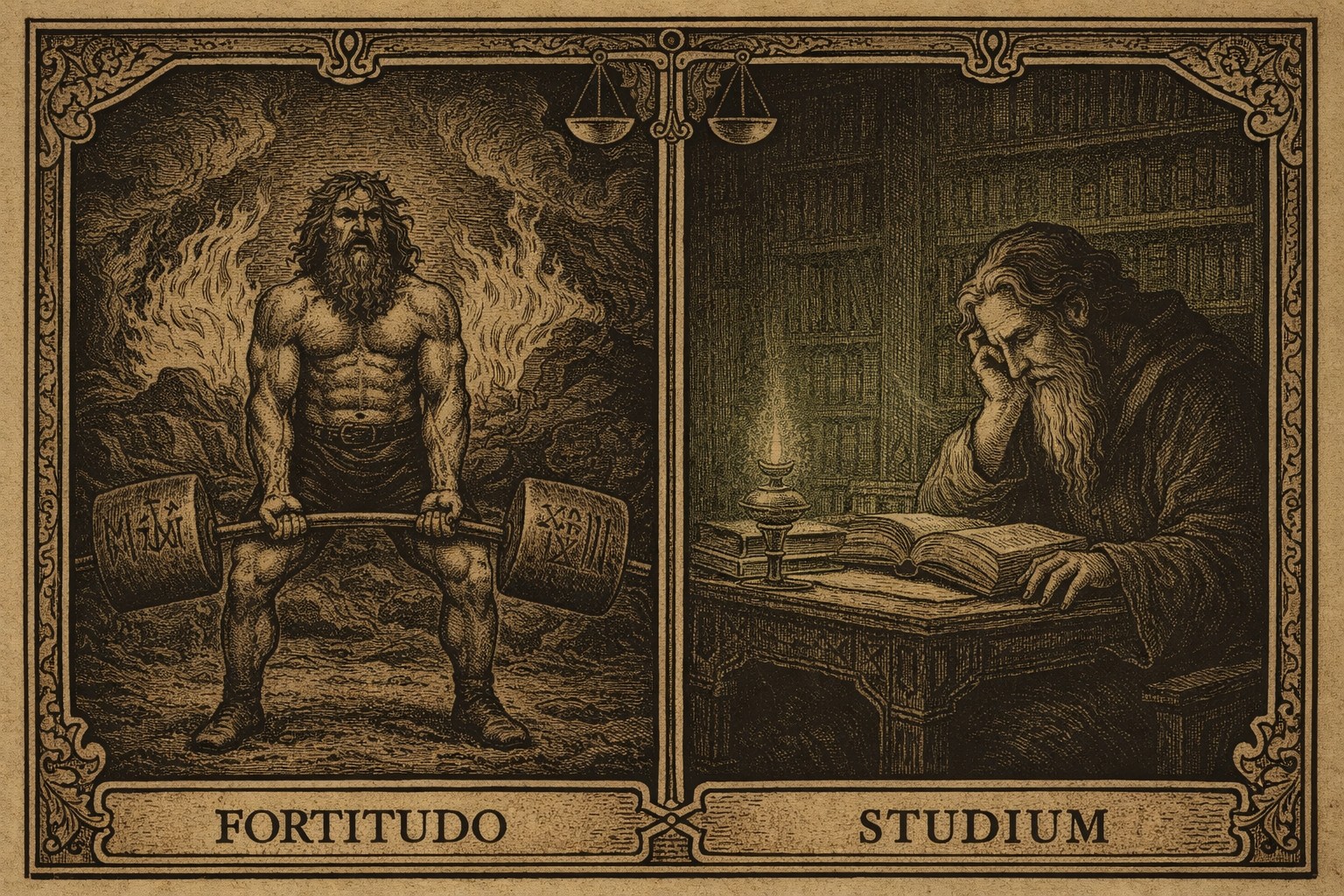
In depth psychotherapy, dreams can often be understood as compensatory. This does not mean that dreams correct conscious attitudes in a moral or prescriptive sense. Compensation refers to balance. The psyche responds to a one-sided or over-identified position by offering images that restore proportion.
This kind of dream is especially common at developmental thresholds, when a previously useful identity or adaptation no longer fits as it once did. Rather than announcing this directly, the psyche works through contrast, atmosphere, and image.
What follows is a clinical vignette illustrating this process. Identifying features have been changed.
Context
The client is in a later life phase of life and has become engaged in depth psychological work, in writing, and in reflection. For much of his life, physical endurance and strength played an important role in self-regulation and identity. In the client’s family, toughness, stamina, and pushing through difficulty were valued traits. Exercise functioned not only as a health practice, but as a primary coping strategy.
More recently, his body has begun to show limits. At the same time, the work that now feels central requires energy of a different kind: attention, presence, relationship, writing, and teaching. The question emerging was not whether physical movement still mattered, but what role it should now serve, and what it could no longer carry.
Against this backdrop, two dreams appeared on the same night.
Dream One
The client is at a university. There is a sense of relief in being there, and a feeling of having stayed away too long. The atmosphere is calm and unhurried. Not many people are present, yet the environment feels right.
He is doing meaningful work for the instructor. There is no sense of being evaluated or trained. He is participating in the work of the place.
Later, the client is in the library. A librarian returns some money, with the understanding that more will be returned later. The client’s brother is present in the dream, as a witness to his work.
On waking, the dominant feeling is one of deep satisfaction and belonging, along with a sense of validation for the meaning and direction emerging through psychological learning and dream work.
Dream Two
In the second dream, the client and his brother are at a specialized strength-training facility. The atmosphere is intense and performative. They enter to a Viking chant, “The words of the High One” spoken in ancient Norse. Viking-style chants are then spoken in English, invoking strength and endurance.
 A thin man is resting. The leader of the facility mocks him publicly, calls him weak, and expels him. As the man is forced out, the chanting intensifies.
The client and his brother withdraw to their room rather than participate. The room is dirty and unsettling. There is a sense that something is wrong beneath the surface. Looking under the bed reveals neglect and decay. The brother asks whether there are mice.
At one point, the client mentions returning with a Rottweiler. When asked what that means, he says, “He is my manner instructor.”
The client walks carefully through the showers, paying close attention to footing in order not to slip on the dirty, muck-covered floor.
Compensation Through Contrast
Compensatory dreams often work through contrast rather than commentary. These two dreams place two environments side by side and allow the difference between them to be felt rather than explained.
In the first dream, value is established through participation, contribution, and presence. Authority is instructional rather than humiliating. Belonging is quiet and unforced. There is legitimacy without performance.
In the second dream, strength functions as identity. It must be displayed and defended. Weakness is not tolerated. Beneath the surface, the environment is uninhabitable.
The dream does not expose this world as false. It reveals what kind of world it is—and what it requires in order to belong.
The dreams do not argue with one another. They simply present two psychic worlds and allow the client to register where life is supported. The symbolic material in the second dream also carries clear personal and familial resonance.
Ancestry and Identification
The Viking imagery is not incidental. The client has Viking ancestry, and in his family there has been a strong identification with endurance and physical toughness. Strength training and physical exertion historically provided reliable means of coping and maintaining coherence. In midlife, the client took pride in considerable physical capacity.
The dream exaggerates this identification through ritual and chant, not to ridicule it, but to make its structure visible, to show the architecture of the life he was living. What was once adaptive begins to show its limits.
The thin man who is expelled embodies what this system cannot tolerate: vulnerability, fatigue, limitation, aging, recovery. When strength becomes identity, these realities must be denied or cast out.
A Shift in Center of Gravity
The compensatory movement in these dreams is not away from the body, but toward a different center of gravity. Energy that was once organized around performance is now drawn toward relationship, reflection, and meaning.
The Rottweiler described as a manner instructor names a different ethic of strength—one governed by restraint, proximity, and timing rather than display.
The first dream confirms this relocation. The client is not returning as a student seeking authorization. He is already contributing. The work is underway.
Reflection
This vignette illustrates how compensatory dreams often appear when an identity has begun to loosen. The psyche does not force change. It registers it.
Rather than condemning earlier adaptations, compensation honors their history while quietly loosening allegiance. What once organized life no longer needs to do so in the same way. Another orientation is already forming.
In this way, dreams do not instruct or persuade.
They show which worlds remain inhabitable and which demand too much heat to sustain.