
The Balancing Act of the Psyche
Just as the body maintains homeostasis by responding to physical imbalances, the psyche possesses a sophisticated self-regulating function. It responds to psychological “one-sidedness” through the images that arise in our sleep. This internal process serves as the psyche’s balancing function, seeking to level the scales between who we think we are and the totality of who we actually are. When life becomes organized too narrowly, through over-reliance on intellect, responsibility, or the drive for achievement, the unconscious often responds with material that carries an opposing tone. This is what C.G. Jung referred to as compensation: an instinctive movement toward wholeness. Compensation appears when something essential to our being has been left out of our waking awareness.
How Compensation Appears
Compensatory dreams rarely offer direct instructions or “to-do” lists. Instead, they present images that carry the emotional weight of what has been neglected. Consider these common shifts in perspective:
- The Controller: A person who lives through rigid confidence and control may dream of being lost, exposed, or suddenly unable to speak.
- The Caretaker: Someone who organizes their life around the needs of others may dream of abandoning all responsibility or being carried by someone else.
- The Rationalist: A life governed strictly by logic and restraint may produce dreams filled with chaos, raw instinct, or overwhelming emotion.
These images are not punishments; they are attempts at inclusion. The dream does not say, “Your life is wrong.” It asks, “What about this aspect of your being?”
A Clinical Vignette: The Empty House
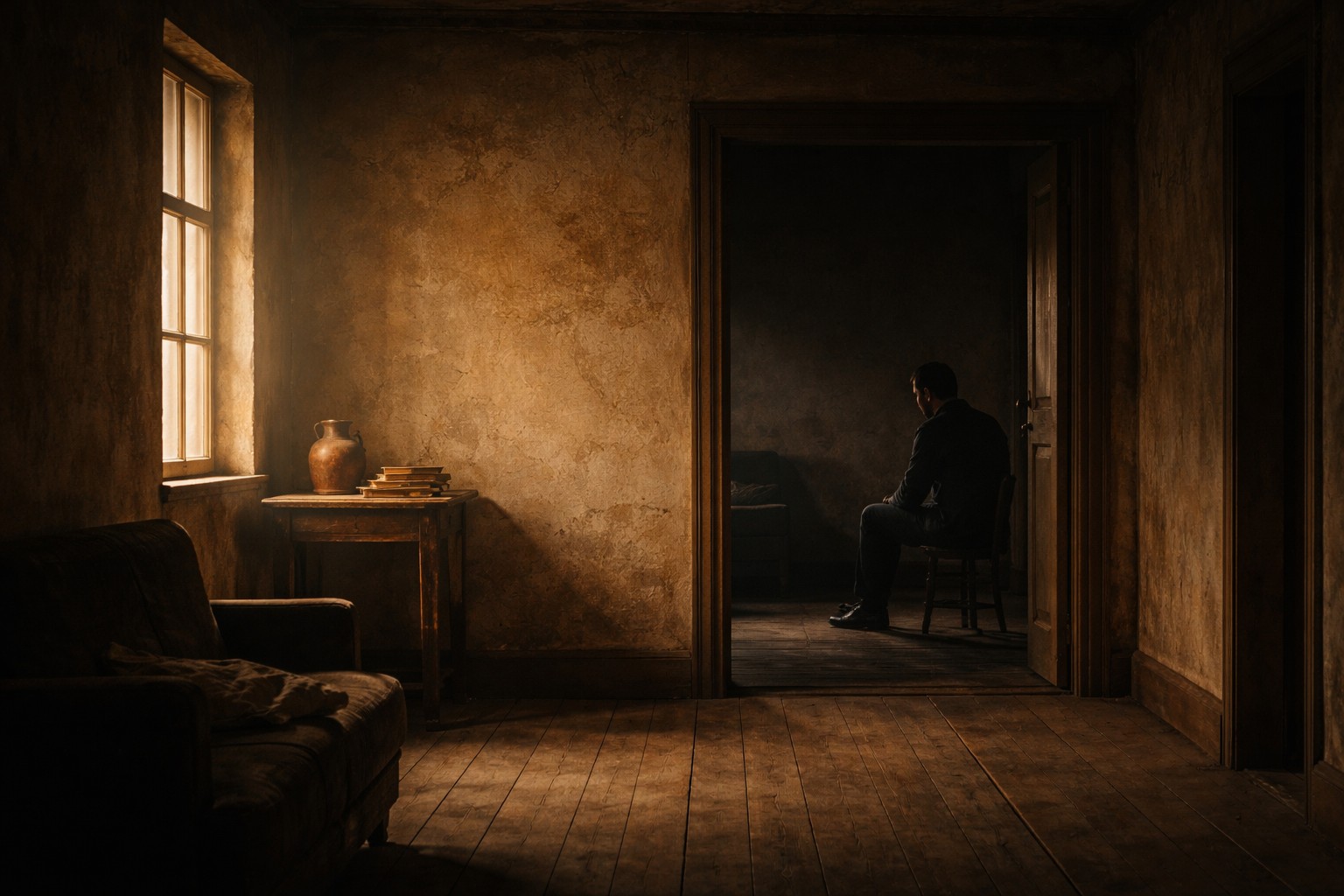
In practice, these kinds of dreams often feel quiet rather than dramatic. A client once described a dream of standing in a large, unfamiliar house. The rooms were orderly and well-kept, but entirely empty. At the back of the house, he found a small, dimly lit room where a figure sat on the floor, knees drawn up, silent and still. In waking life, this person was highly functional, composed, and accustomed to managing every challenge through action. He was unsettled by the stillness of the dream figure. Through our work, the dreamer came to see that this figure represented a part of his psyche organized around endurance rather than expression — a part of the self that had been overlooked in the rush of being capable. Over time, this image became a reference point, helping the dreamer engage with his emotions in a more nuanced, less functional way.
Symbols as Blind Spots
In depth work, we treat dream images as metaphoric symbols rather than fixed definitions. A symbol remains alive as long as we resist reducing it to a single explanation. Working with a therapist helps mediate the space between the image and our awareness, allowing us to stay close to how a dream feels and what it evokes. This is important especially in compensatory dreams, so the dream can land and take root within conscious awareness. When compensatory messages are ignored, the imbalance often finds other ways to manifest—through physical symptoms, strained relationships, or a persistent sense of inner discord. However, when approached with curiosity, these dreams act as a psychological map, highlighting our blind spots and showing us the terrain we have yet to explore.
As Jung put it:
The analysis and interpretation of dreams confront the conscious standpoint with the statements of the unconscious, thus widening its narrow horizon. — C. G. Jung, Mysterium Coniunctionis, ¶306
Interpretation, in this context, is not about arriving at a correct meaning, but about allowing an image to remain in relationship long enough for its implications to emerge. Meanings shift as life changes, and what a dream carries often becomes clearer through time, dialogue, and lived experience.
Widening the Scope of Life
The aim of staying with the logic of a dream is to widen the boundaries of how we live. By bringing what has been pushed to the margins back into relationship with our conscious mind, we begin to restore a sense of lost equilibrium. Ultimately, dreams serve as a vital corrective, reflecting back the parts of ourselves we cannot see and providing a necessary counterweight to our conscious attitudes when we have drifted away from our inner center.