
When Everything Happens at Once: Overwhelm, Meaning, and the Mind Trying to Protect You
Have you ever had a season where challenges seemed to arrive not one at a time but in clusters? Job stress followed by a relationship rupture, sleep difficulties, car trouble, financial strain — all with no time to recover between them. At times these shifts are gradual; at others, they feel like a sudden storm. One day things were fine; the next, the bottom fell out.
When the nervous system is pushed past capacity, the mind responds the only way it knows how: by trying to predict, manage, analyze, and control. Unfortunately, this survival response often creates the very suffering we are trying to escape. Catastrophic thinking (“It’s all falling apart,” “I will lose everything”) activates the same neural pathways that physical threat would, tightening muscles, disrupting sleep, altering appetite, and exhausting emotional resilience. Overwhelm becomes a whole-body state.
And in these seasons, we often abandon what steadies us — movement, friendship, routine, sunlight, stillness — because the mind insists the only job is to solve the crisis. The result is not clarity, but quicksand: the more we struggle against the uncertainty, the deeper we sink into it.
The Enso and the Art of Not Forcing Direction
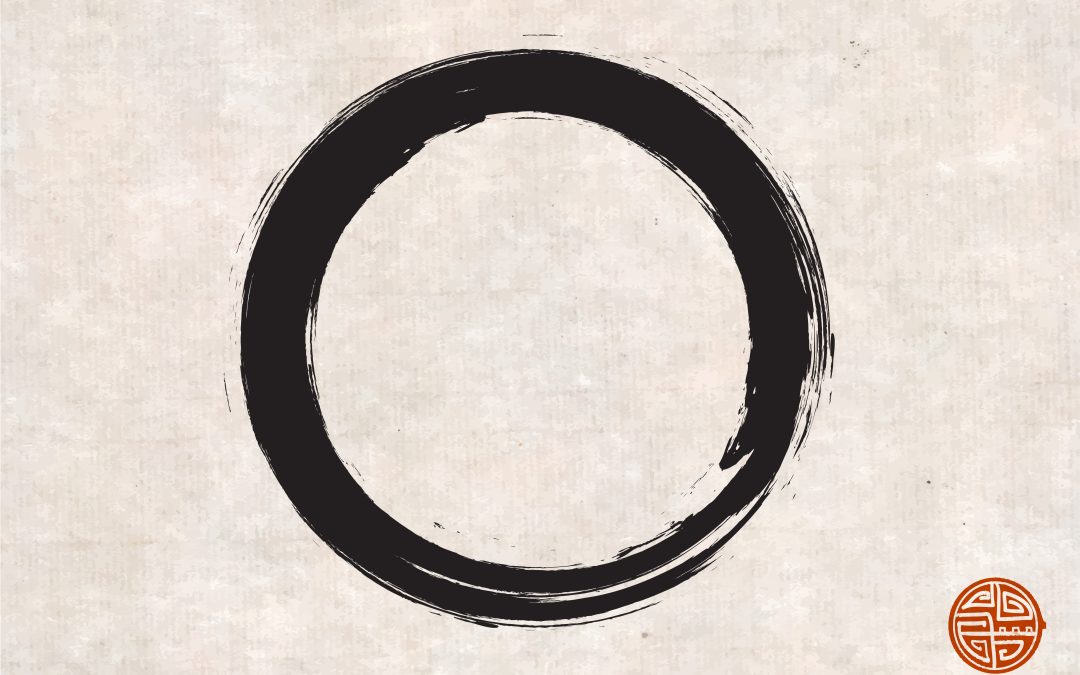
In Zen philosophy, the enso — a circle painted in one breath — expresses the freedom found when the mind releases its grip on control. The circle is both wholeness and emptiness: nothing to manage, nothing to predict, and nothing to judge. In psychological terms, this is a shift from sympathetic activation (“brace for impact”) into parasympathetic safety (“I can breathe here”). When the system moves out of danger mode, perception widens; options return; the body remembers that problem-solving is not the same as panic.
Turning Toward Overwhelm With Curiosity
Depth work does not ask, “How do I stop this feeling?”
It begins with, “What is this feeling doing?”
Overwhelm, though painful, is often purposeful — a form of protection, a signal, a boundary the body drew when the mind would not.
Questions that help us listen instead of fight:
-
What is this overwhelm protecting me from seeing or feeling directly?
-
Is the intensity about today, or is something older being stirred?
-
What part of me learned that vigilance equals safety?
-
If I were not braced for impact, what might become possible?
These questions are not puzzles to solve; they are doors.
Curiosity interrupts catastrophe because curiosity is not afraid.
When we are no longer fighting the reaction, we may begin to understand why the reaction arrived.
Overwhelm can mark the threshold where coping ends and meaning begins.
The work is not to silence the alarm but to learn what it is alerting us to.
Closing Reflection
Sometimes the mind’s loudest warnings are not malfunctions but messages.
When we turn toward them with steadiness rather than struggle, a small space opens — just enough for breath, perspective, and the first quiet steps forward.